
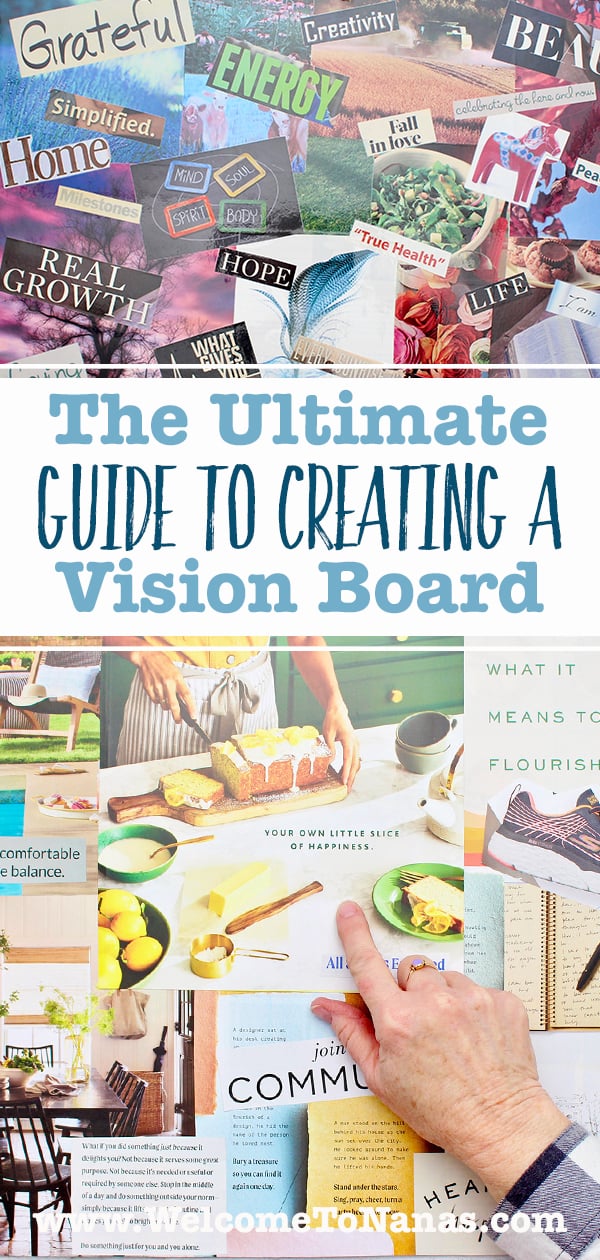
This is the ultimate guide to creating a vision board that feels motivating, achievable, & exciting. Help kids make their dreams and goals happen with brain science & art!
Jump to:
- Vision Boards
- Meaningful Craft Alert: Vision Boards
- What is a Vision Board (or Dream Board)
- Vision Board Ideas: Style & Focus
- Supplies for a Vision Board (Dream Board)
- How to Make a Vision Board in 5 Steps
- Vision Board Examples
- Craft Tips
- Craft Variations
- FAQ About Dream Boards
- More Paper Crafts for Kids
- Come Join the Fun at WTN!
- More Crafts!
- The Ultimate Guide to Creating a Vision Board (or Dream Board) That Actually Works
Vision Boards
Vision boards have been a highlight of my visioning and goal setting process for the past 30 years, I have two hanging up in my workroom right now.
I loved taking this concept into my home ec classroom for 100's of kids to have a hands on, visual tool in the units where we talked about the different areas of our lives and set goals. They loved the activity and wanted them laminated so they would last longer!
I would like your kids (and you) to know the science behind this wonderful tool and why it is so effective.
And then we’ll explore the simple way to put them together. I’m so excited to share this with you! They have made such a difference in my own life.
Meaningful Craft Alert: Vision Boards
Even though a vision board looks like a simple art project, it can truly help move your goals forward if you use them well. They actually work if put to use correctly, bringing dreams to reality. I’ve seen it happen.
I’ve made them with kids of all ages in my home ec classes, and with adults in community groups of various types. I love seeing their faces light up as they show the posters and talk about their dreams. For some, this is the first time they have connected with their dreams and moving forward to make them happen.
This post will show you how to help your kids (or you) create a vision board that feels motivating, achievable, and exciting. Making goal setting feel exciting, not overwhelming or confusing.
What is a Vision Board (or Dream Board)
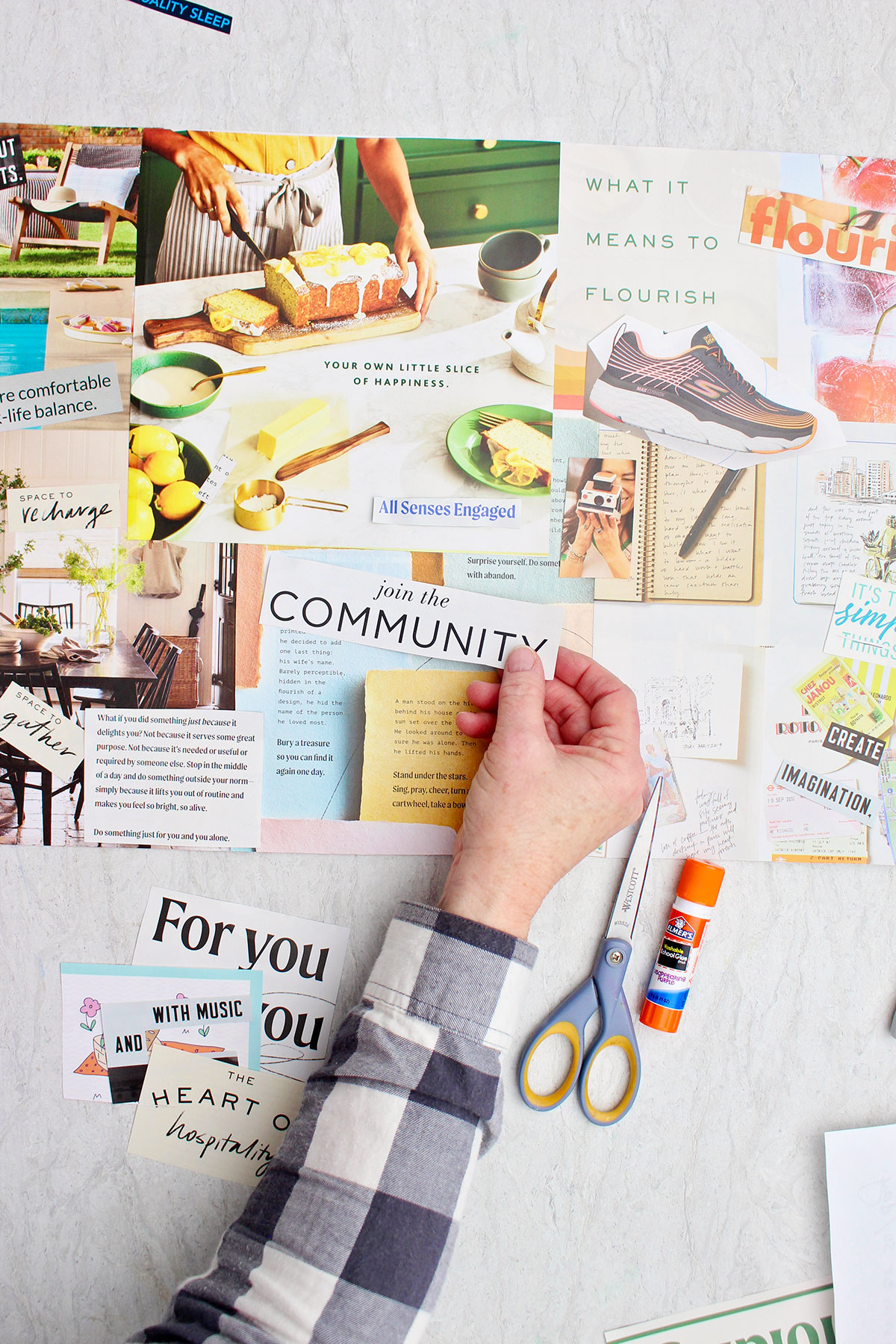
A vision board is a grouping of meaningful pictures you’ve chosen to put together into a collage. But it’s much more than that. It is a process that encourages kids (and you) to ponder what’s important to them, and what they hope for in their future.
This process of pondering and then the visualization in pictures is what causes the magic to happen with a vision board. It allows dreaming and can help set a direction for the dream. Kids can connect their actions in the present to their dreams for the future. Honestly, couldn’t you as an adult use a dose of that too?
Why do vision boards work?
Would you believe me if I said there is actually brain science behind this project? That a vision board is a tool that speaks brain language- neuroscience. It helps create a visual roadmap for your brain to navigate and follow.
Here is a simplified explanation in a way you can explain to kids.
In the world there are millions of pieces of information that come at us every day. There’s no way our brains can process that much info! So a part of our brain called the reticular activating system (RAS) filters out what info our brain should pay attention to. It’s a bundle of nerve cells located at the back of our brains near the brain stem. Wild, huh?
So when we take the time to dream about our future and what we want, make some goals, and then represent these dreams and goals in pictures- we are telling the RAS what we want it to pay attention to.
This is magnified by a vision board that we are emotionally excited about, with pictures of what these dreams may look like. So the RAS starts looking for those things in the information it is filtering and brings them into the brain. It notices what we told it we think is important!
Vision board science in action
For example, if you purchase a certain game, all of a sudden you notice how many people own and play that same game. You notice ads or displays in stores featuring that game.
There aren’t suddenly more games in the world the day you purchased yours. You just clued the RAS into paying attention to information about the game because you made it more important by thinking about it and visualizing it.
Also, visualizing something has the same affect on the brain as actually doing that thing. So visualizing a goal of finishing a marathon or handing in a report helps build a pathway in the brain to actually do that very task.
You are practicing doing the task by picturing doing the task, which builds confidence and the likelihood of actually doing it because you feel more capable. This info always amazes me.
That’s how the vision board and pondering dreams works. But remember, the vision board and visualization needs to be paired with action. A goal isn’t accomplished just by picturing it done! That makes sense. It is an important part of the road to success though!
So vision boards and the planning process help kids:
- Talk about their dreams
- Personally connect to what they want for the future
- Visually see reminders of their dreams/goals every day
- Focus on making the future something they can work towards.
And, it puts the RAS to work to pull in info on things they can do now to make the dream happen later- vision plus action. We all need little positive dopamine, feel-good hits, to keep us moving forward!
Vision Board Ideas: Style & Focus
Before making a vision board, let’s decide what type of vision board you want to make. Remember, there isn’t a right or wrong to this, the important thing is that there’s an emotional connection to what you’re doing.
Three Main Vision Board Styles:
Themed Boards
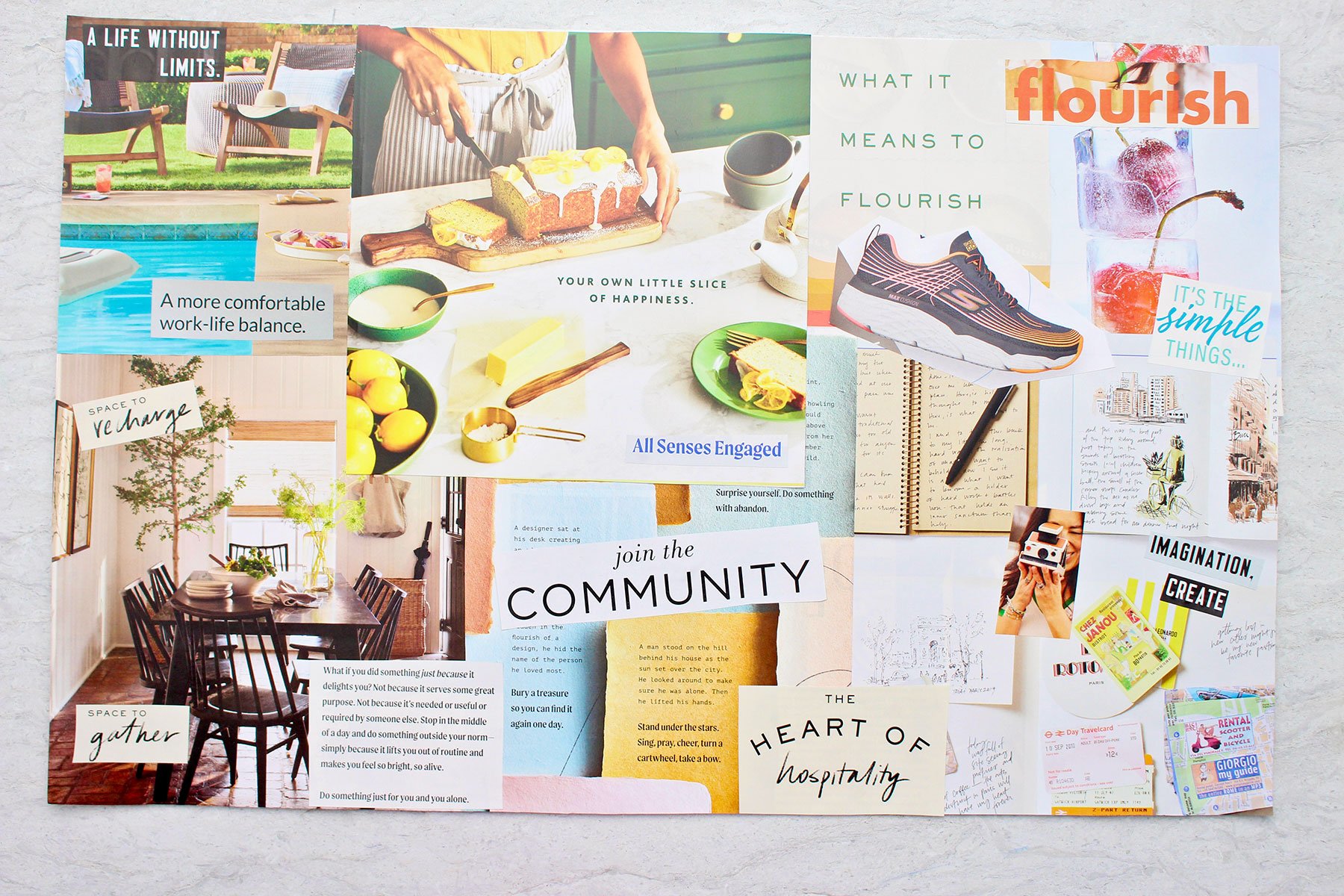
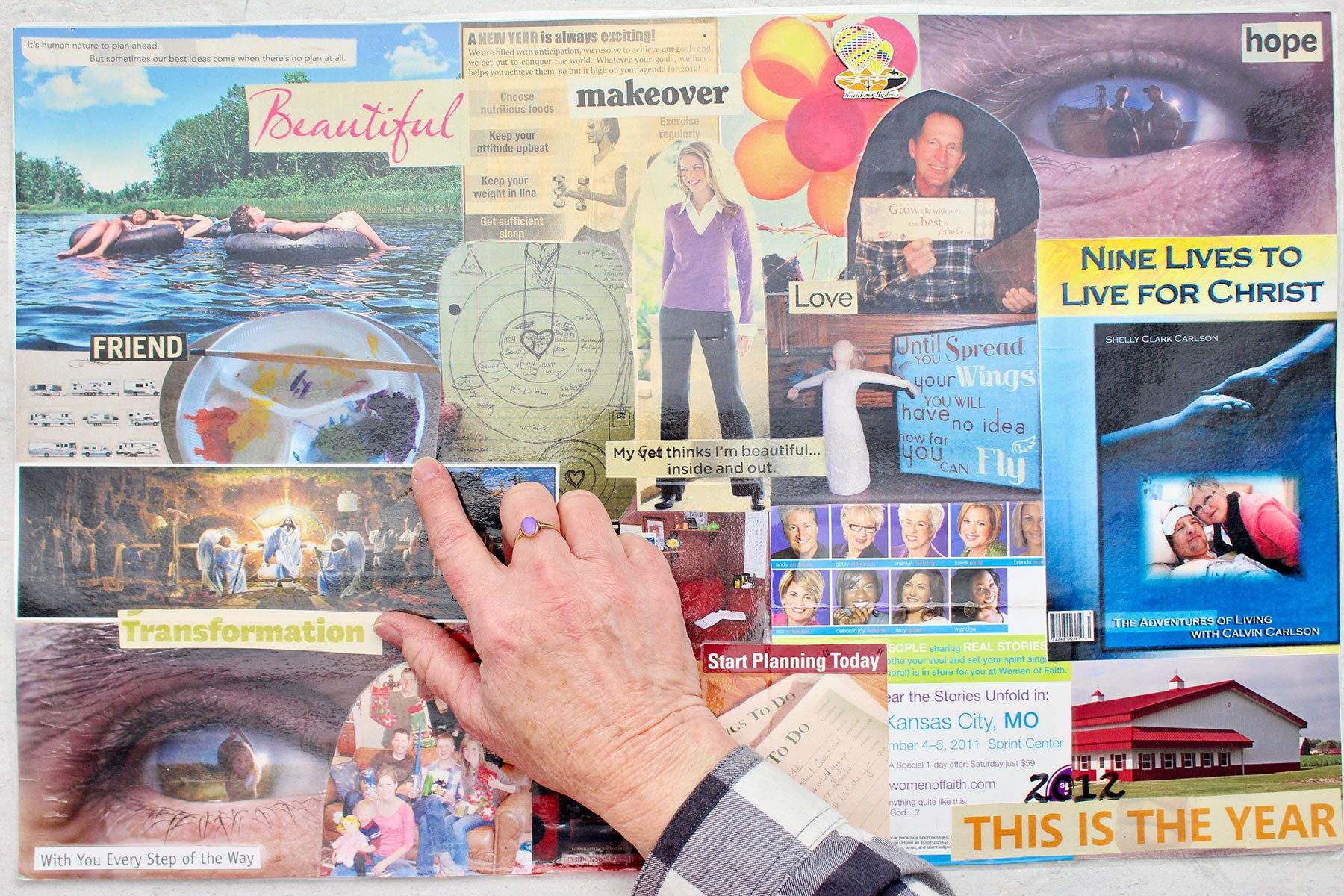
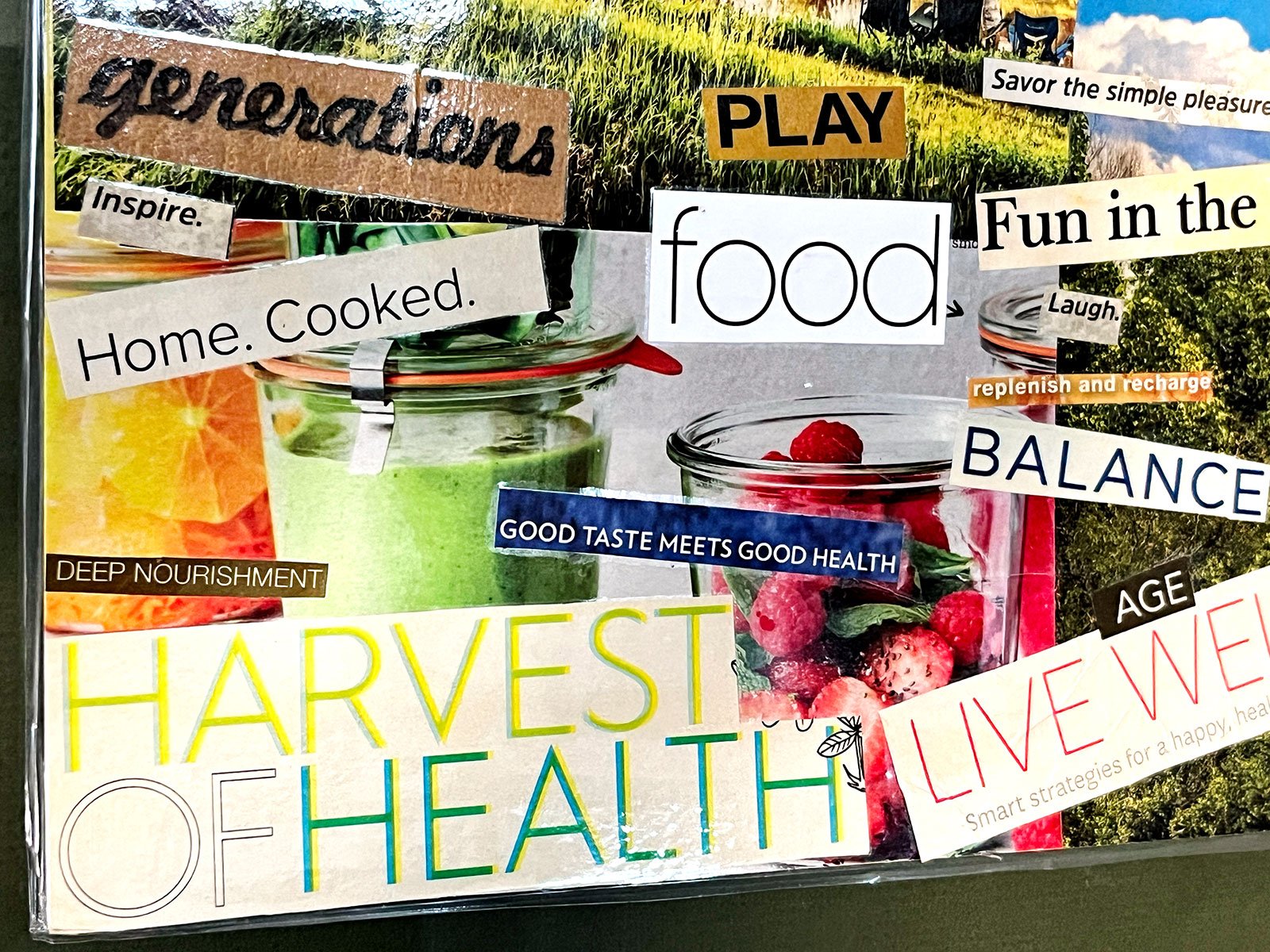
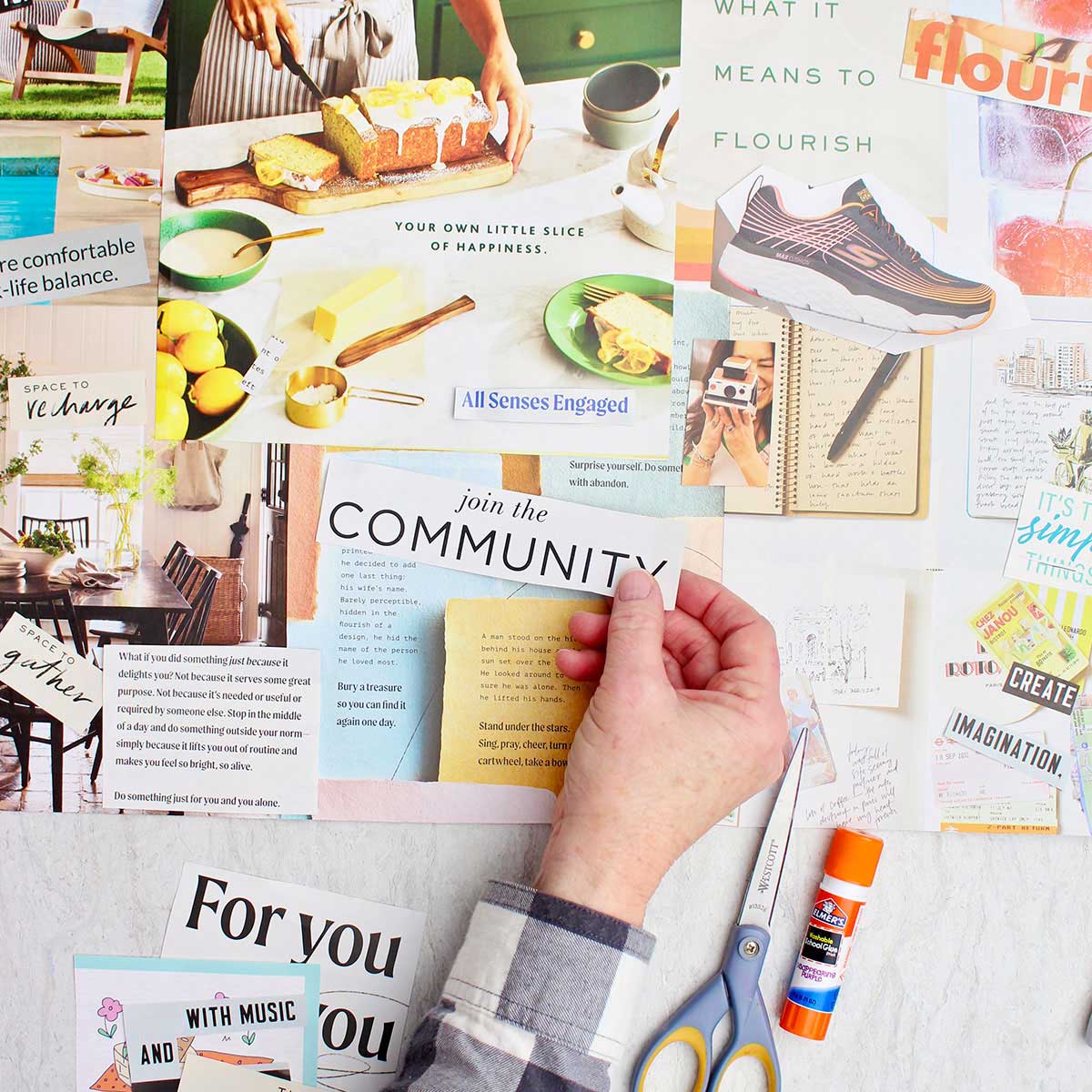
Themed boards focus on the areas of your life, like your career, health, or relationships. This type of board can feel less overwhelming to younger kids. This is the type of vision board I made in these pictures and on the video.
Examples:
- Learning goals at school
- Health and self-care
- Sports or hobbies
- Family or friendships
Goal-Specific Vision Boards
These boards focus on one specific goal and can be very emotionally connecting and exciting to kids.
Examples:
- Learning to read chapter books
- Saving money for a special toy
- Making a sports team
- Practicing kindness or confidence
Digital Vision Boards (pinterest, Canva, device backgrounds)
Digital boards are an option for older kids, teens, and adults that like screens and are impatient with art projects. They are also great to use as computer and phone backgrounds.
Note: I do not recommend starting with digital vision boards as they are less likely to invoke the same emotion and investment as creating a hands-on project. Kids will often want to do this option to speed through the process which will not yield the same results.
I prefer getting kids off of screens and devices to dream, plan, and create. Working on paper and with your hands works differently with the brain. Actually I feel this way for adults as well. Use your discretion of course.
If you choose this type of board you will use a document or program (like a document, Canva, or a Pinterest board) and paste the pictures and words on the page. Then print it off or use it as the background on your device.
Examples:
- Pinterest boards
- Phone or tablet wallpapers
- Canva vision boards
What to Put On a Vision Board
There are many different areas of our lives to dream about and envision in the future. It is important to start broadening a child's thinking to include more of these areas. Otherwise they just think of one or two areas like sports or entertainment.
When we get to the planning stage of our vision board there will be a Free Vision Board Planning Worksheet to help with this. But to start with, here is a list of areas of life that can be included in a vision board or used as a themed vision board.
Professional Vision Board
This area is about career and business goals. It may resonate more with older kids, teens, and of course adults. It involves:
- Dream jobs
- Businesses they admire
- Skills they want to learn
- Role models
Physical Dream Boards
Physical dream boards focus on health and wellness and are easy for younger kids to relate to. They may include:
- Sports they want to try
- Healthy habits
- Rest, calm, and self-care
- Strong bodies and minds
Monetary Vision Board Inspo
A monetary vision board has to do with money, finances, and financial freedom. To make this more relatable to kids that don’t often have much money to access, make the goals less complicated such as:
- Saving jars
- Things they want to buy
- Donating or giving goals
- Financial independence concepts (for older kids)
Love Vision Board Ideas
Love vision boards are about relationships goals, family goals, and belonging. For younger kids they will focus on friendships and family but may include ideas for their own future family plans. This could include:
- Family time
- Friendship goals
- Acts of kindness
- Emotional growth
Vision Board Ideas for The Mind
Vision board ideas for the mind are perfect for kids as they are in school and focused on learning and personal growth. But all ages will have goals for the mind and continued learning. These may include:
- Books to read
- Reading goals
- Skills to learn
- Creative goals
- Confidence-building words
- Affirmations
- Education to pursue
Supplies for a Vision Board (Dream Board)
Here are a few quick notes about the supplies you will need to make your vision board!
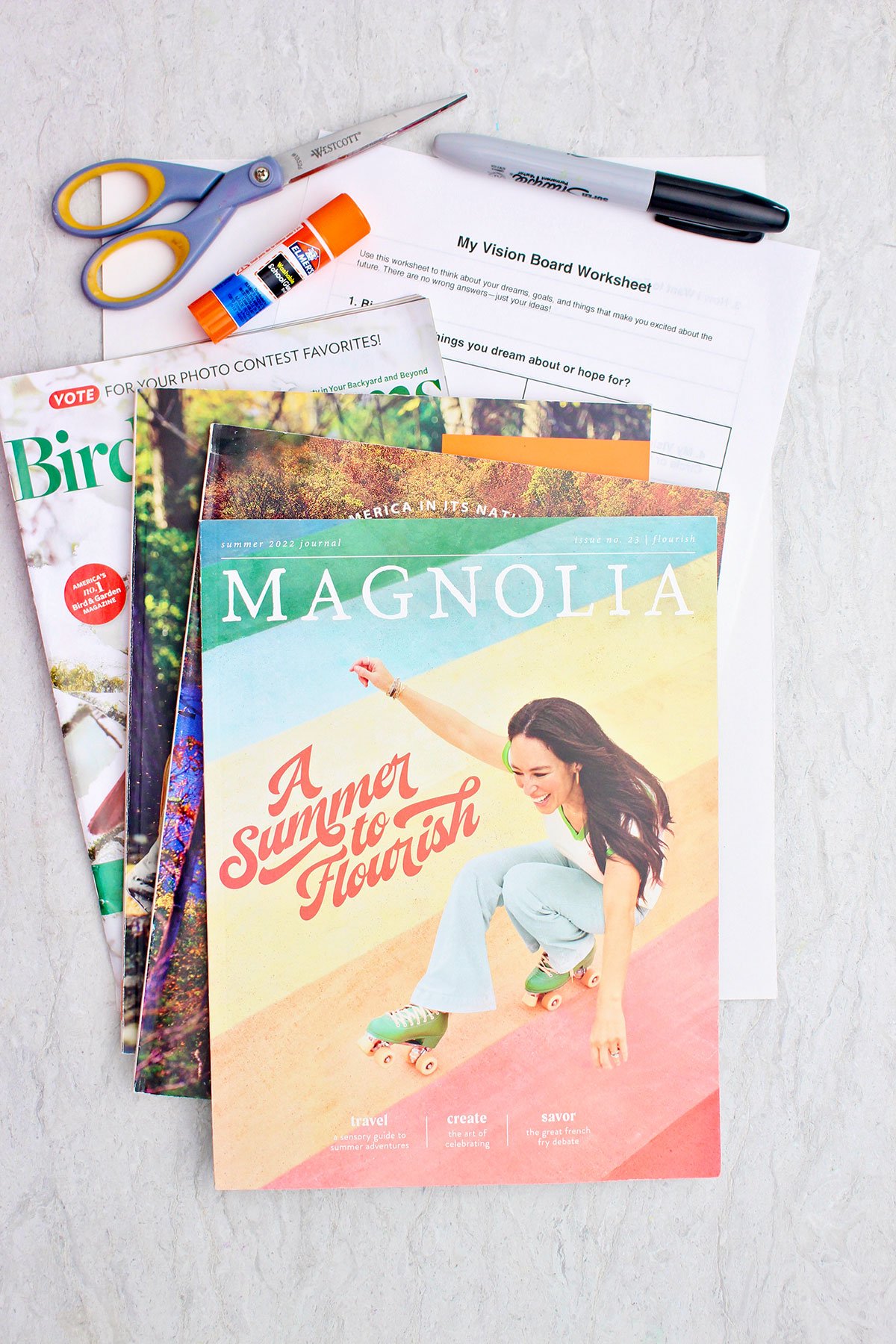
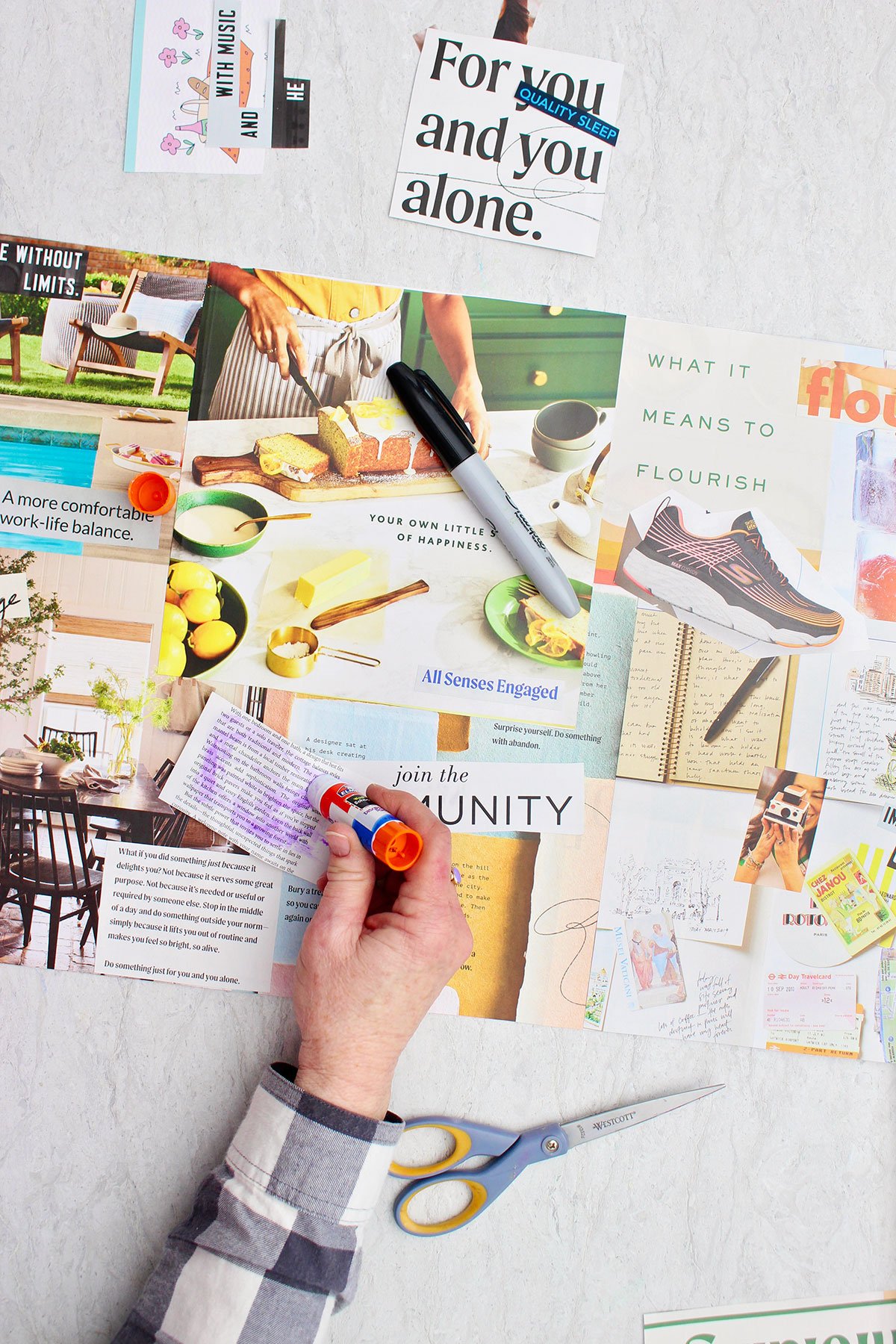
- Poster board- Poster board is my favorite vision board background. It can be white, black or any color. Use a whole sheet or a half sheet. I don't recommend going much smaller.
- Magazines- Collect all types of magazines to cut up but include topical magazines too if possible.
- Glue sticks- Glue sticks work best with magazine paper but school glue can also be used.
- Scissors- A nice pair of scissors for cutting out pictures.
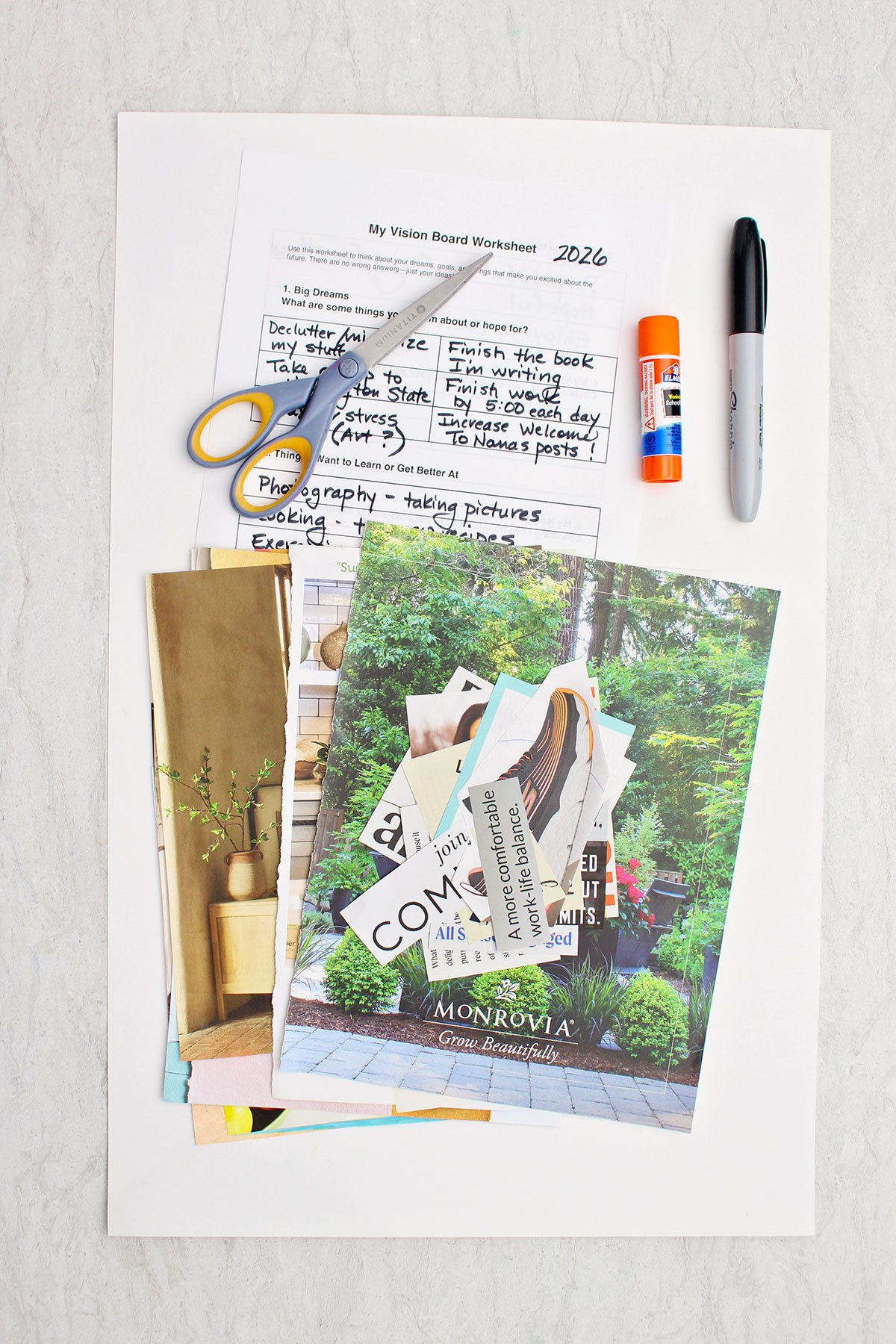
- Planning worksheet- Here is a Free Vision Board Planning Worksheet that will help in the dreaming/planning process in step one below.
How to Make a Vision Board in 5 Steps
Alright, now for the fun part. Let's make a vision board together. Get something to drink, collect the simple supplies listed above, and let’s get started!
Remember, there is no right or wrong on how to make a vision board. And you will need to remind kids of this when they ask “Am I doing this right?”
The process is broken down into five simple steps.
Step 1: Plan
So planning for this project with kids takes some guided help from an adult. Talking about the future springs from some good conversation and questions to open up thinking.
It’s really a brainstorming activity where the child gets to think about what their dreams are, and about their future and interests.
The many areas of your life
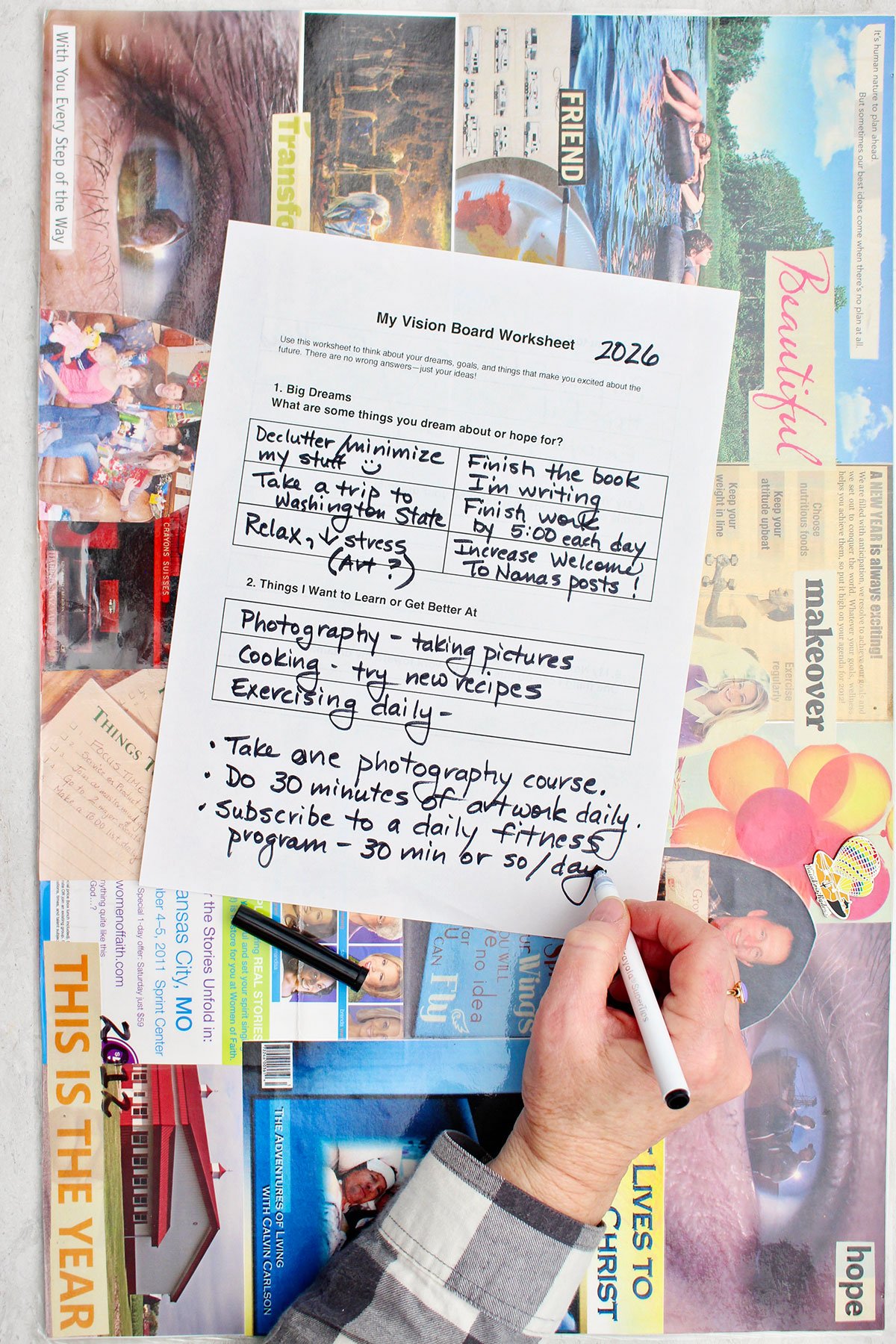
Use the Free Vision Board Planning Worksheet for this step. It will help the child to focus on various areas of their lives and expand their thinking for the future.
Young kids are often hyper focused on one aspect of their lives- like sports or music. That is fine, but they can become aware of other areas and their dreams in those areas as well. This seeds the mind for moving towards opportunities a vision board activity will open up.
With kids, visioning and setting goals takes help and encouragement. Have older kids write some thoughts on the worksheet. If this is a hindrance to the brainstorm process for younger kids, you can write the ideas down for them.
Don’t skip this step, it is a clarifier and creates a map with “destinations” to plug into the mind, like a GPS! Brainstorm with no judgment, avoid “that will never work” comments about the kids ideas.
Ask prompter questions like:
- What makes you excited?
- What do you want to get better at?
- What would make this year amazing?
- What does your ideal average day look like a year from now?
- How do you feel when you dream about that in your future?
Make a dream into a goal
After some dreaming time, make a couple dreams into goals. Be as specific as you can. Don’t just say, “My goal is to get healthy.” What does that mean?
Perhaps:
- Complete a 5K marathon without walking.
- Learn to make a new recipe every week.
The more specific you are, the more excited you will be to make and look at your goal setting vision board and work towards these ideas and goals!
Step 2: Find Images
Put on some music to have some fun with step two.
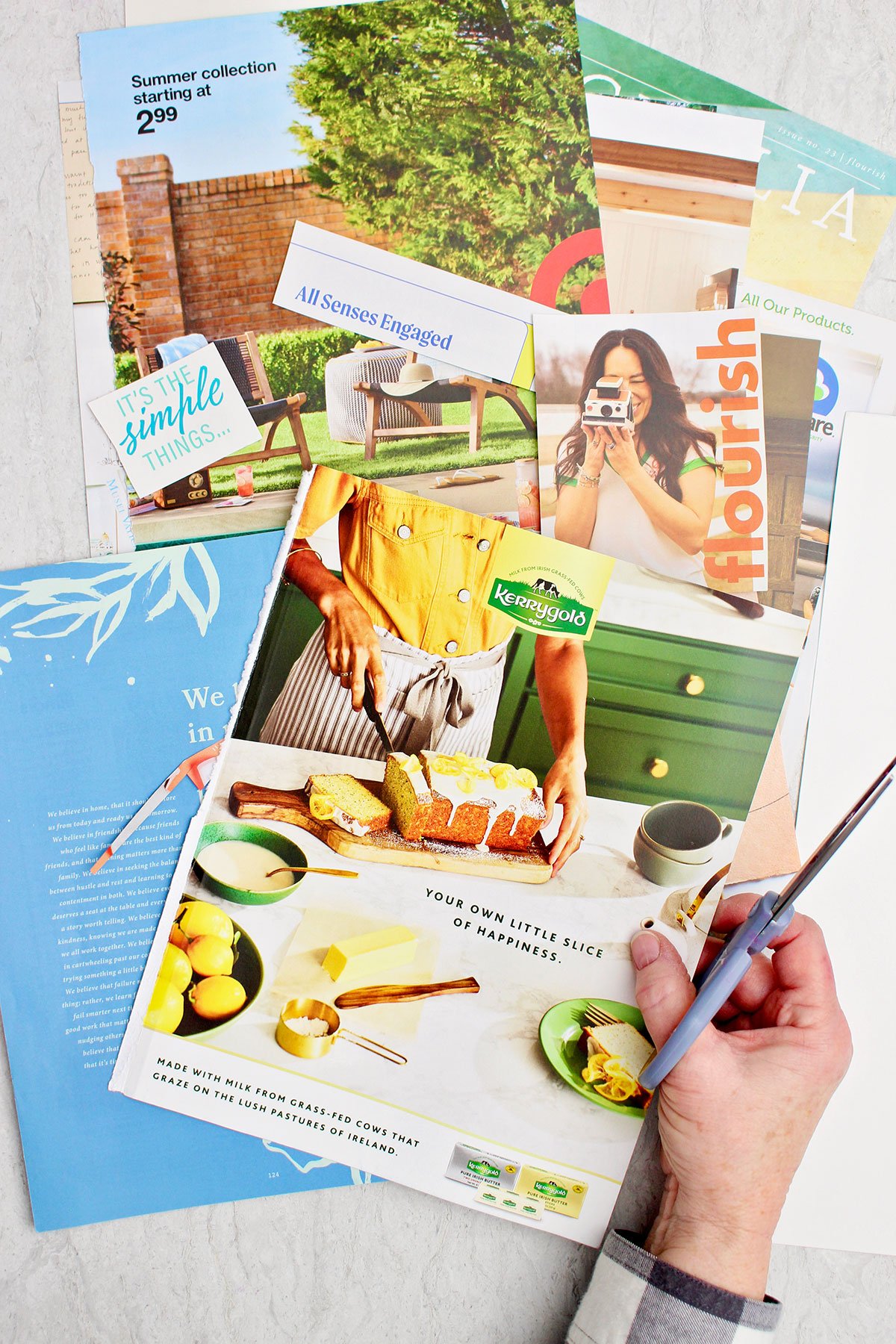
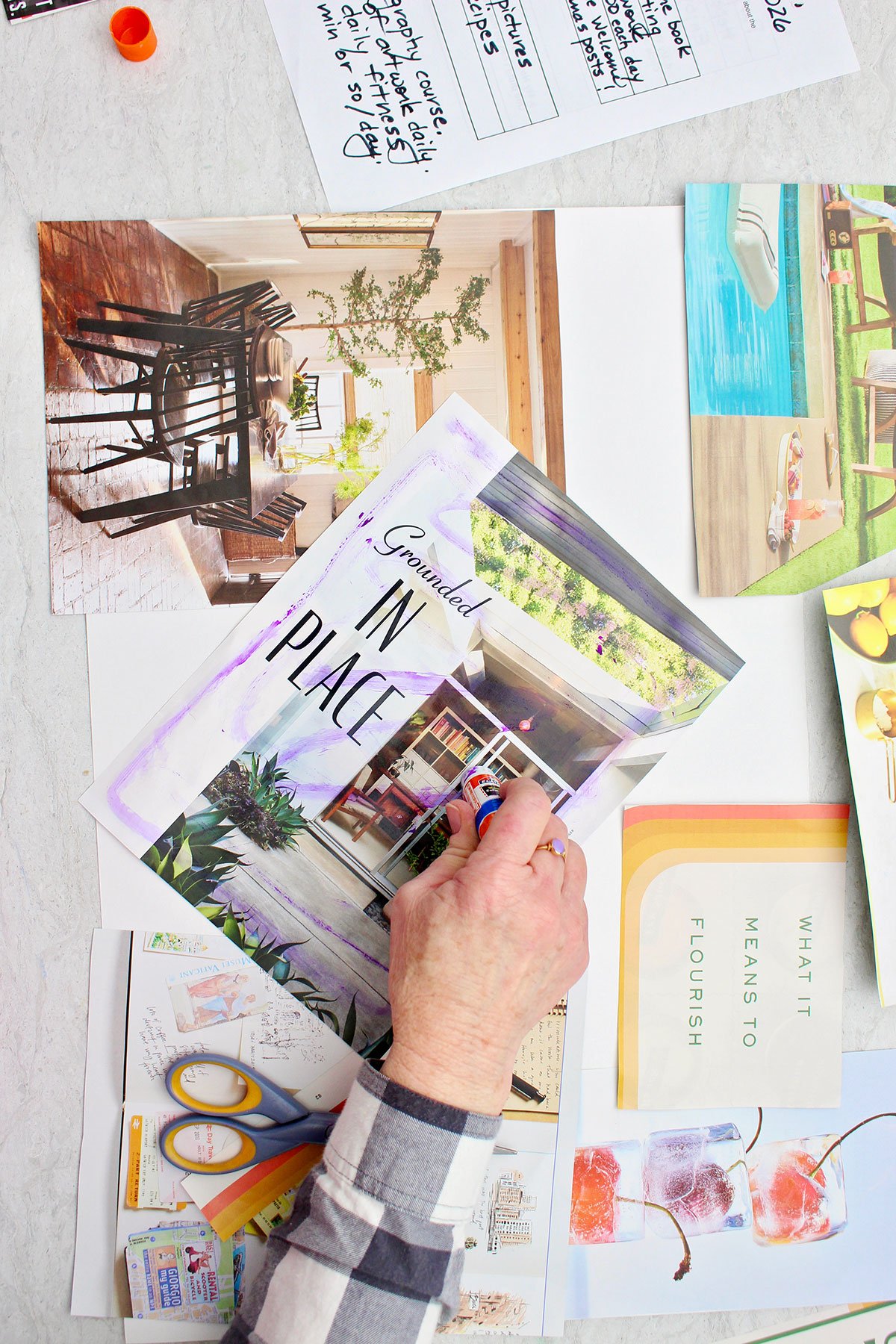
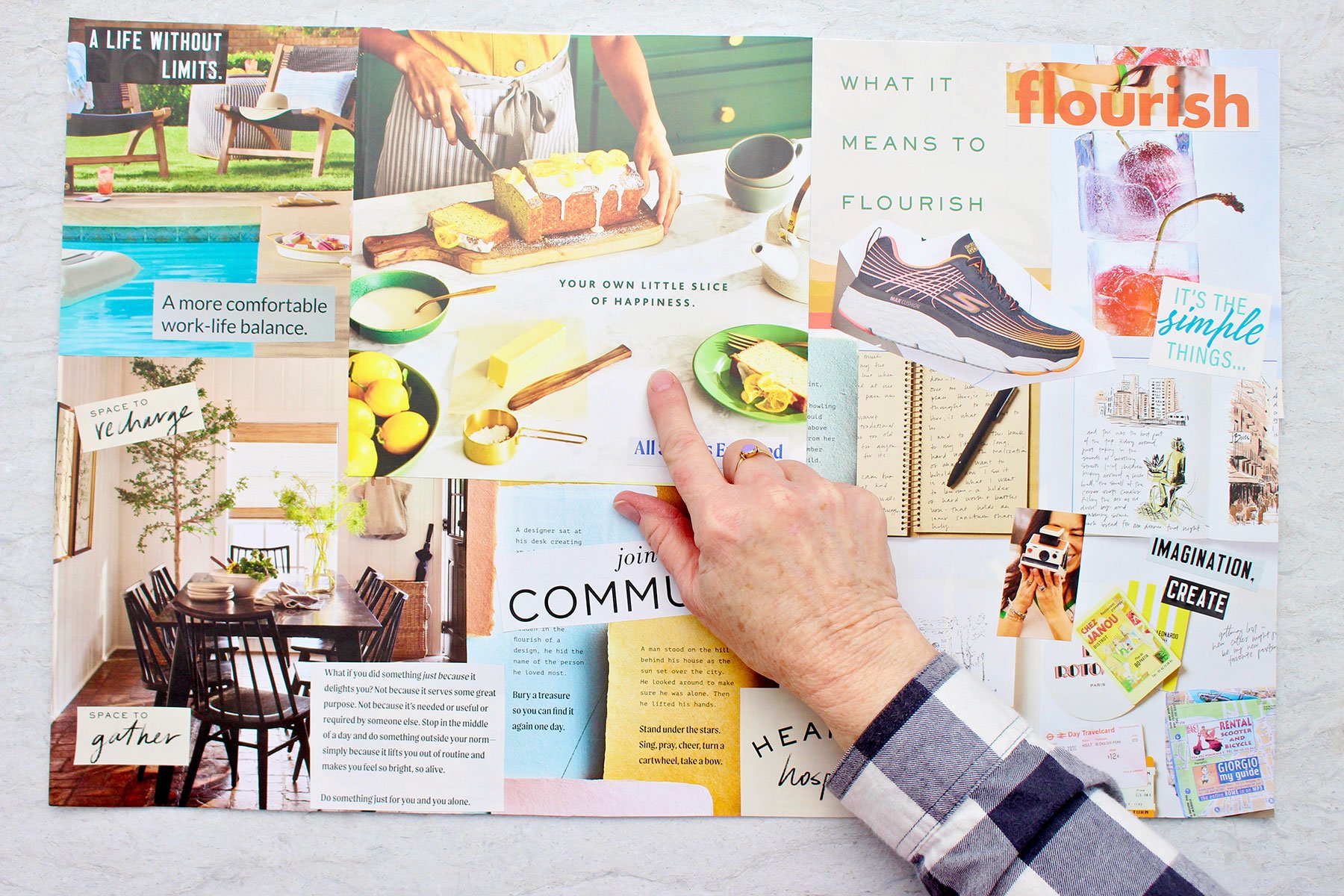
Look through magazines to find vision board pictures (and words) that will go along with the ideas you’ve brainstormed and written down on the worksheet. Find pictures that represent your dreams and goals.
Choose pictures that make you FEEL excited, not just look good. The feeling is key to making you inspired by the vision inspiration board so it motivates you to move forward towards your dreams!
Encourage the kids and gently direct them in this process. Ask questions to encourage engagement like, "That's a great picture! What made it grab your attention and caused you to choose it?"
I love using magazines for pictures but there are other sources for pictures.
Use:
- Magazines
- Printed pictures
- Drawings
- Stickers
- Photos
- Fabric
- Postcards
Step 3: Organize / Layout
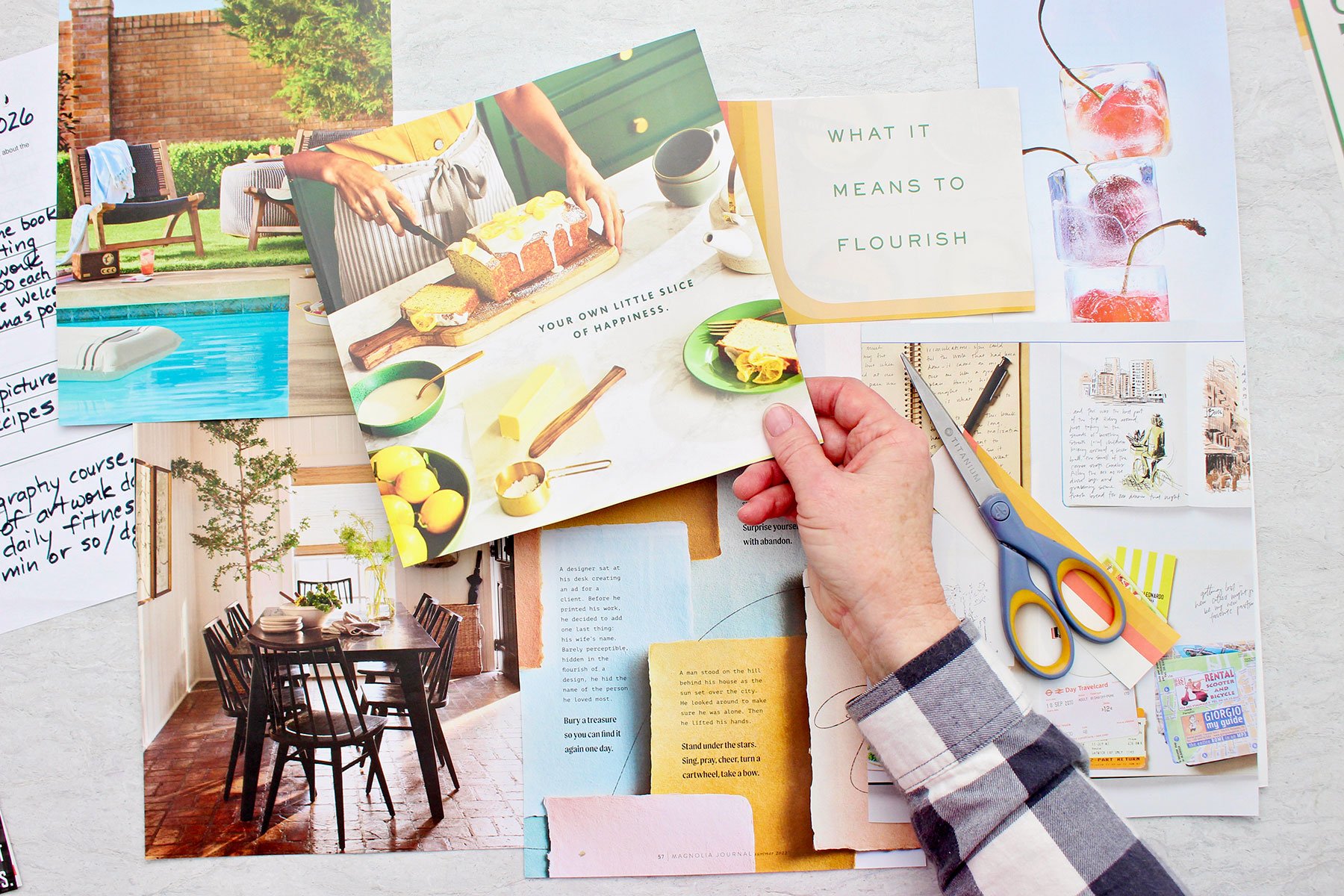
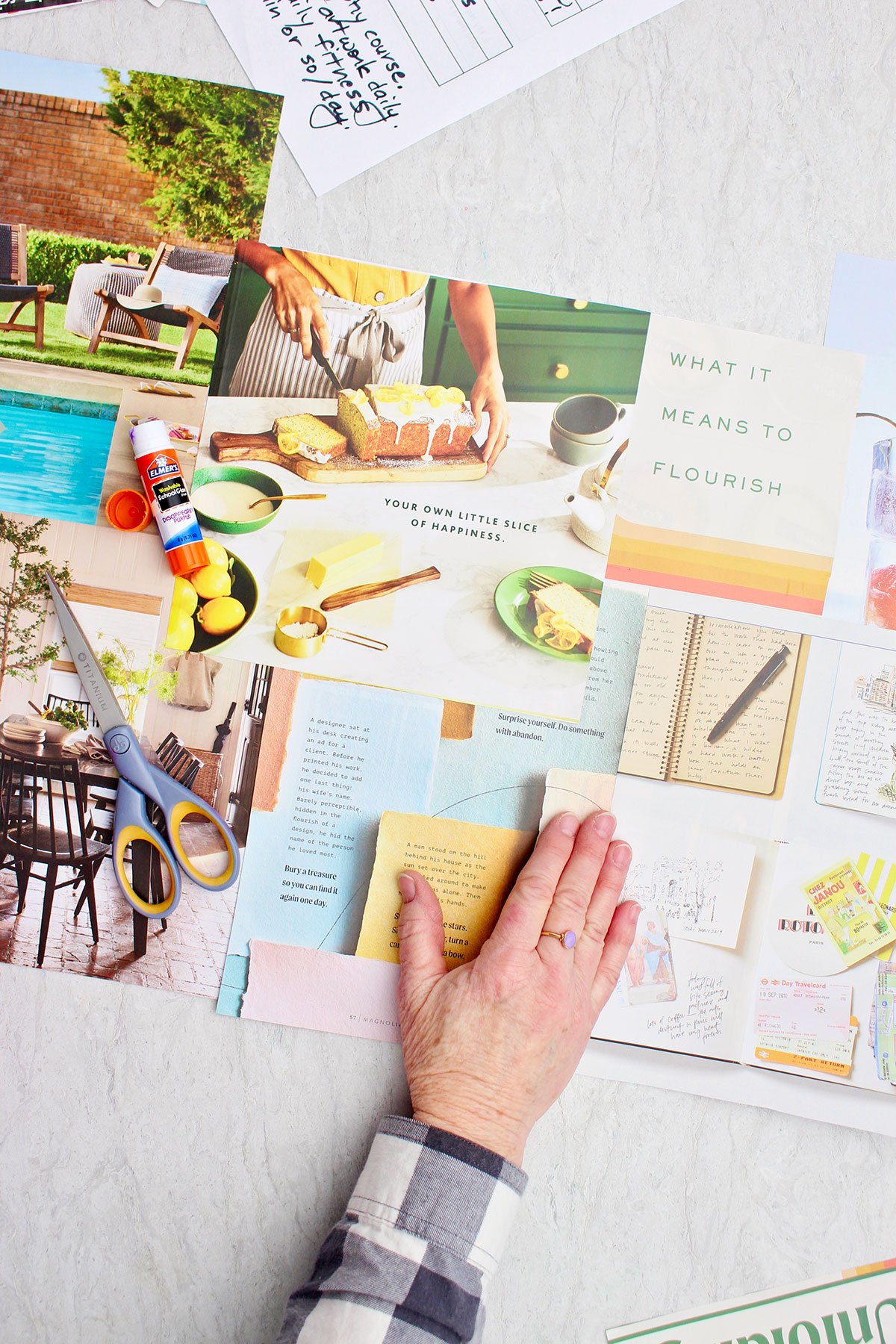
Before gluing anything down on the poster board, let the kids lay everything out and move them around. Remember adults, this is for the kids to do by themselves as much as possible so it is meaningful to them.
They will play with the vision board pictures until they have the pictures arranged in a way that pleases them. It’s ok if they overlap.
This is the time to take out pictures that don’t fit or feel right. Just keep the pictures that have real emotional energy to them. Remember, there aren’t rules for doing this “right”, enjoy the process.
It’s nice to group pictures together that represent the same dream or goal so you get that main idea when you look at that part of the vision board.
You don’t have to cover every square inch of the poster board if you don’t want to, but you can if you want! I usually do.
It helps to put the bigger pictures on first and then add the smaller ones on top so they don’t get covered up.
Once you’re happy with the arrangement, use Glue sticks to start gluing the pictures in place. Think about the goals and dreams you have as you glue because that helps your RAS focus on them like we mentioned before. You can say the goals out loud too.
Step 4: Adding Text because Words Matter!
From the Free Vision Board Planning Worksheet used in Step 1 you should have some words that you would like to add to your poster board.
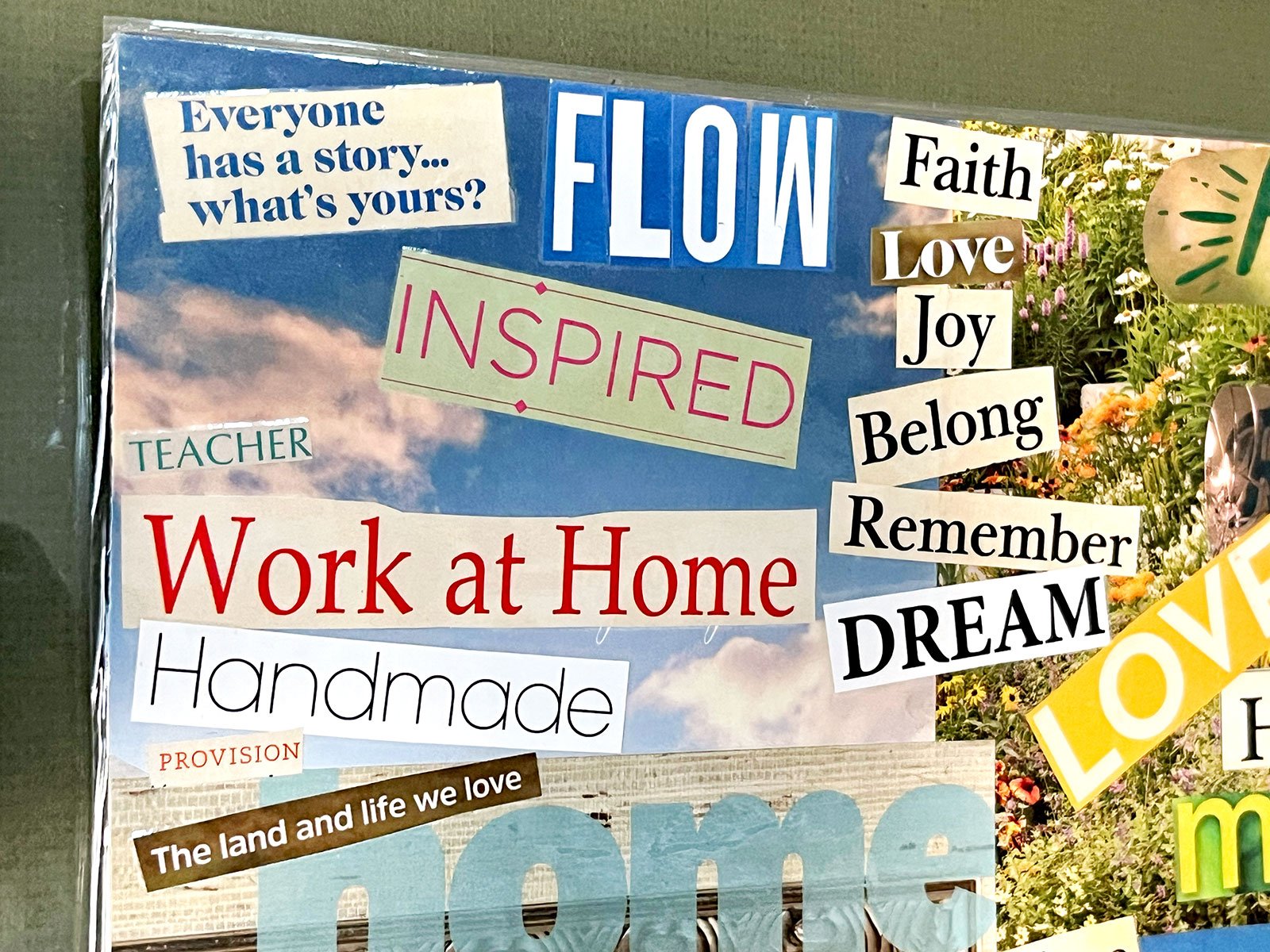
Find these words or similar words that are meaningful to you in the magazines.
Ideas:
- Short phrases
- Positive statements
- Single powerful words
- Affirmations (i.e.- I can do hard things)
You can find the words or cut out letters and glue them together into the words. It is fine to write them on the board with a marker too.
For younger kids, you can help write the words they choose if needed.
Add and glue the words on top of the pictures you already glued down on the vision board.
Finish up by adding any extra personal touches that suit the board. I’ve glued on small items like dried flowers, small jewelry, etc.
Your vision board will be 100% unique to you! When you’re done you will love looking at it, it’s your own GPS map to your dreams and goals.
Step 5: Choose the Perfect Place
Your vision board is finished! Now, it needs to be located where you can see it easily. That is the magic sauce, the way the dreams come to mind each time you look at the board.
Seek to look at it at least once every day and feel the emotion that it brings up with the dreams and goals. This keeps the RAS (reticular activating system) actively looking for new opportunities and ideas to bring to mind that will move you forward as you act on them.
Ideas for good places to put up the board:
- Bedroom walls
- Homework areas
- Inside a binder or on the binder as a cover
- Digital device backgrounds
- Refrigerator
Vision Board Examples
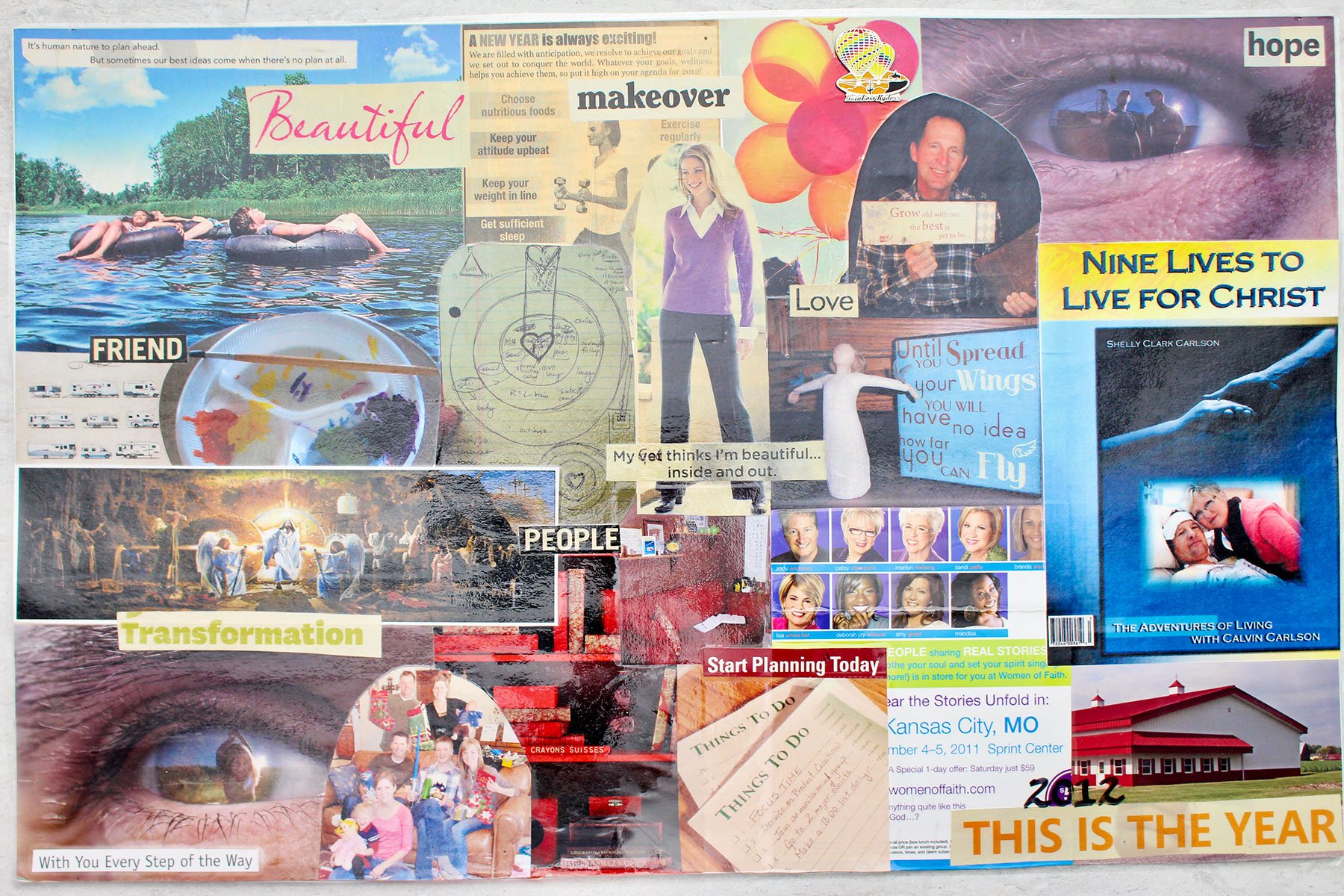
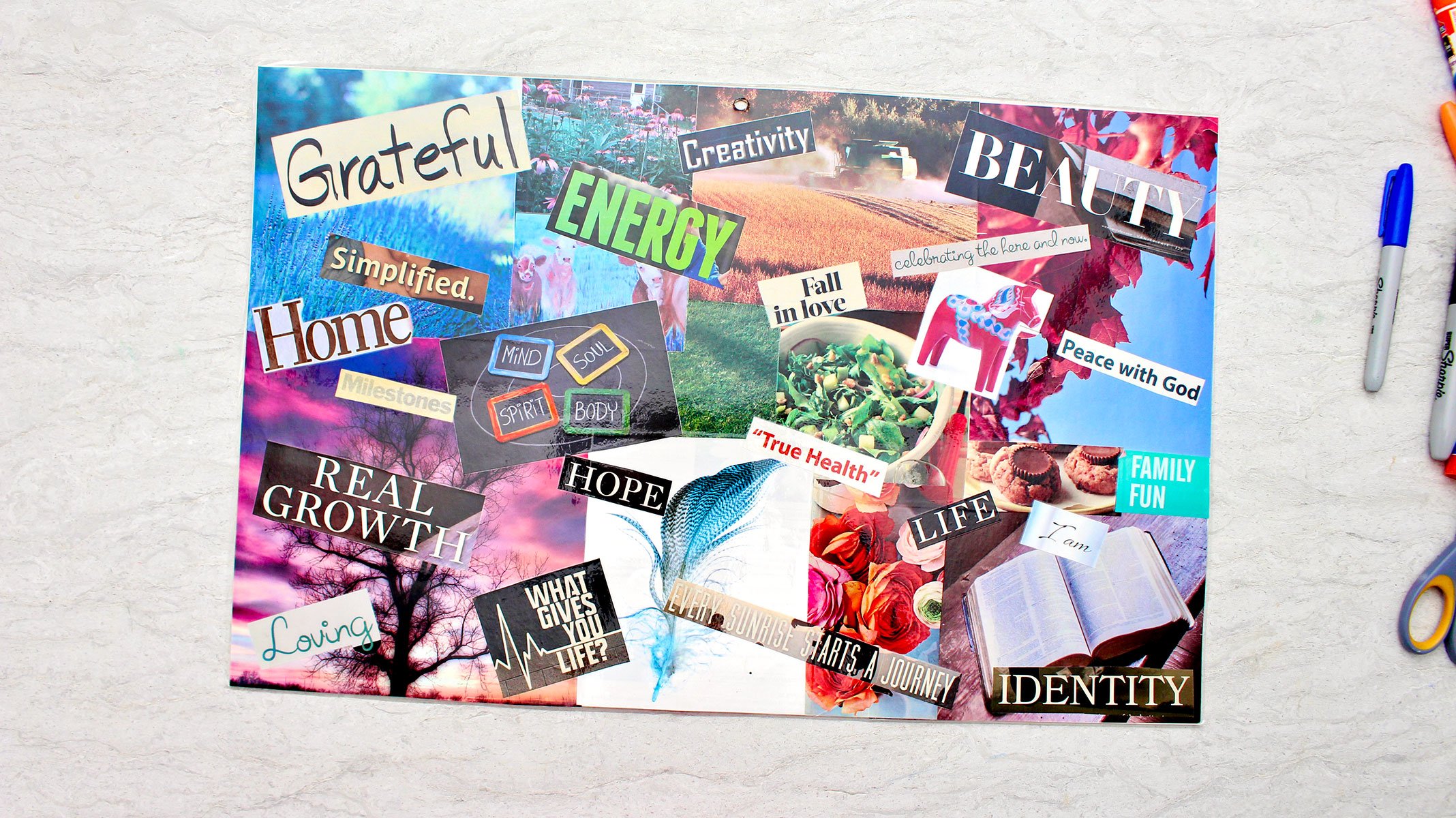
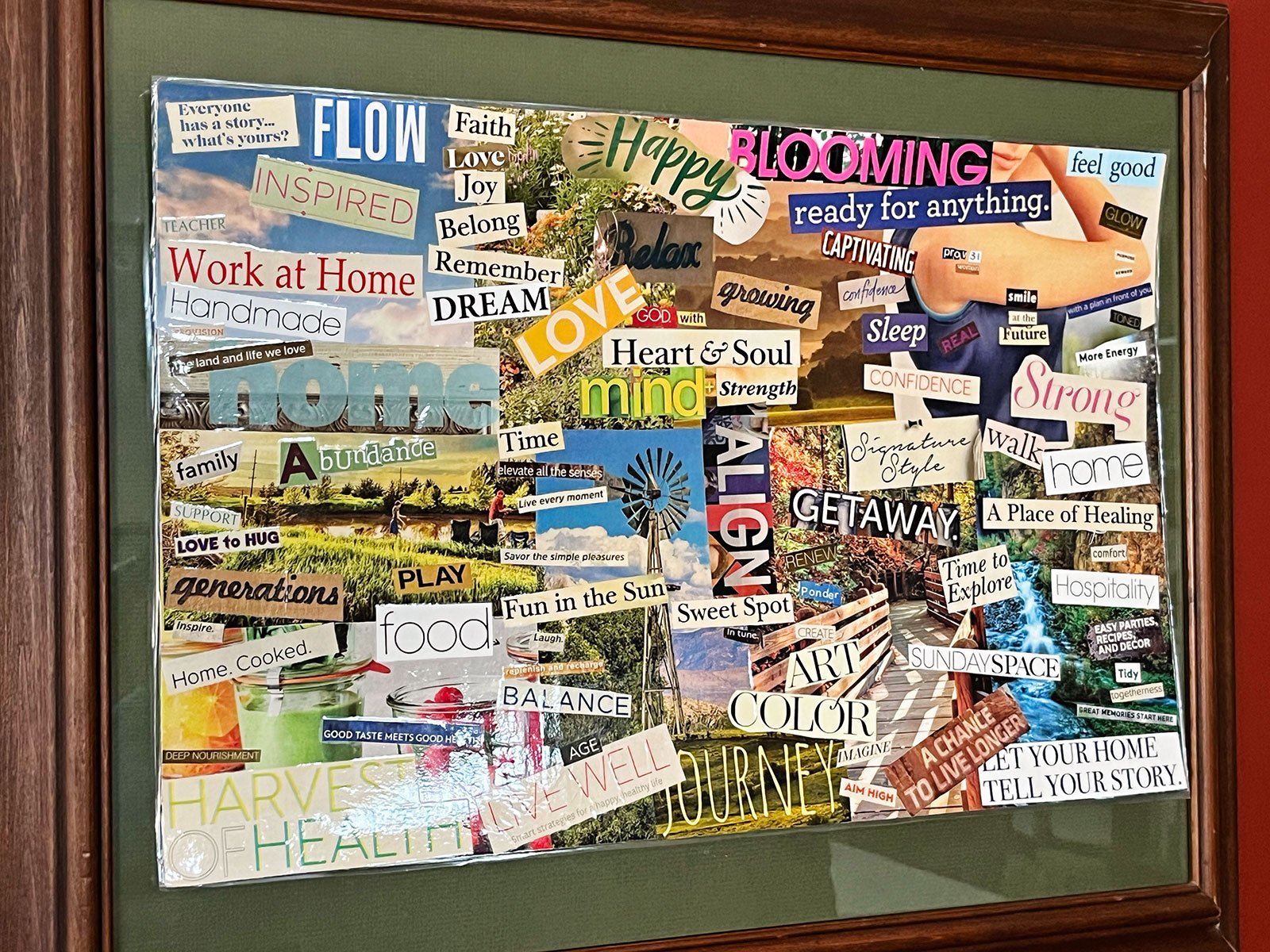
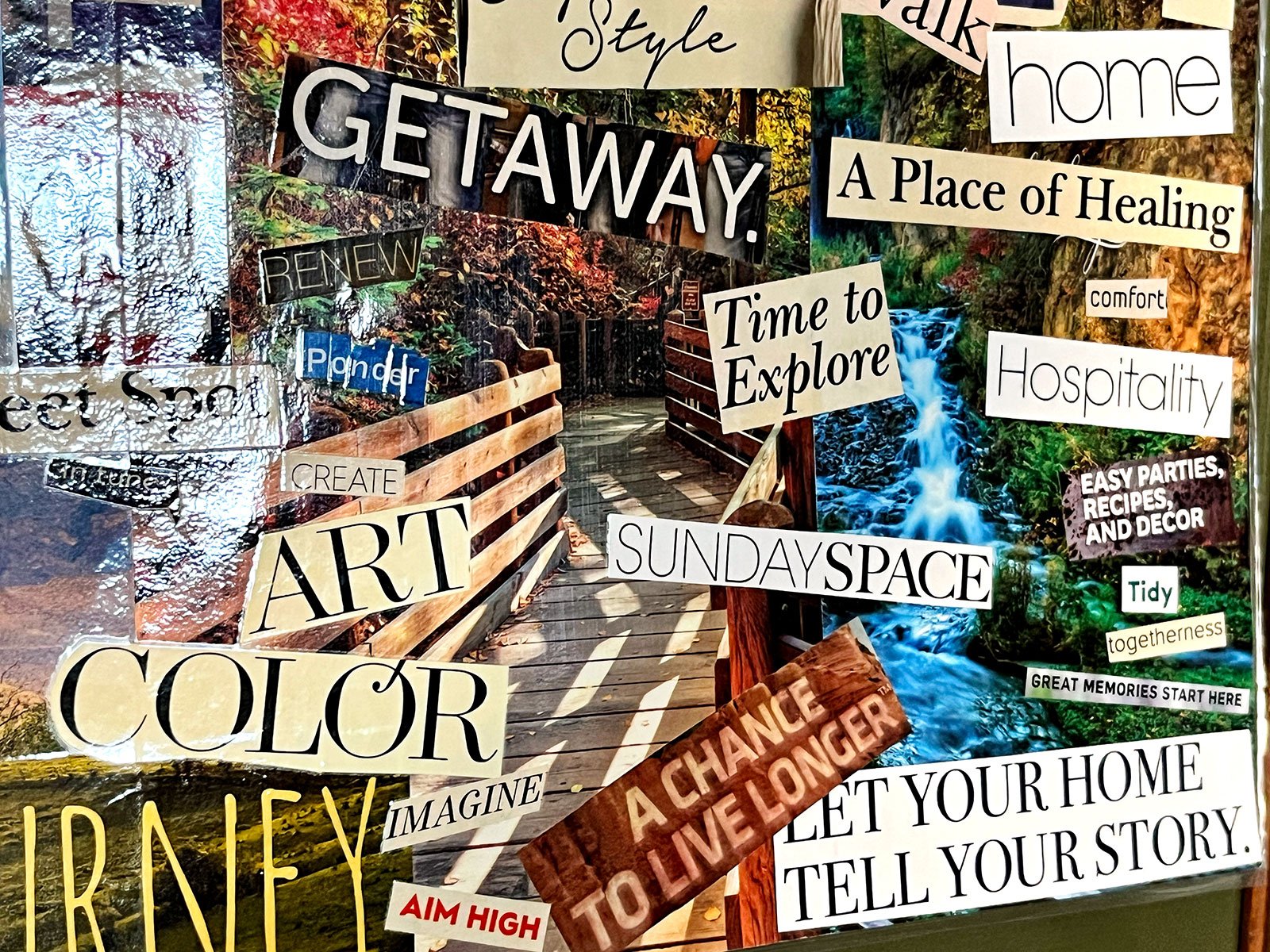
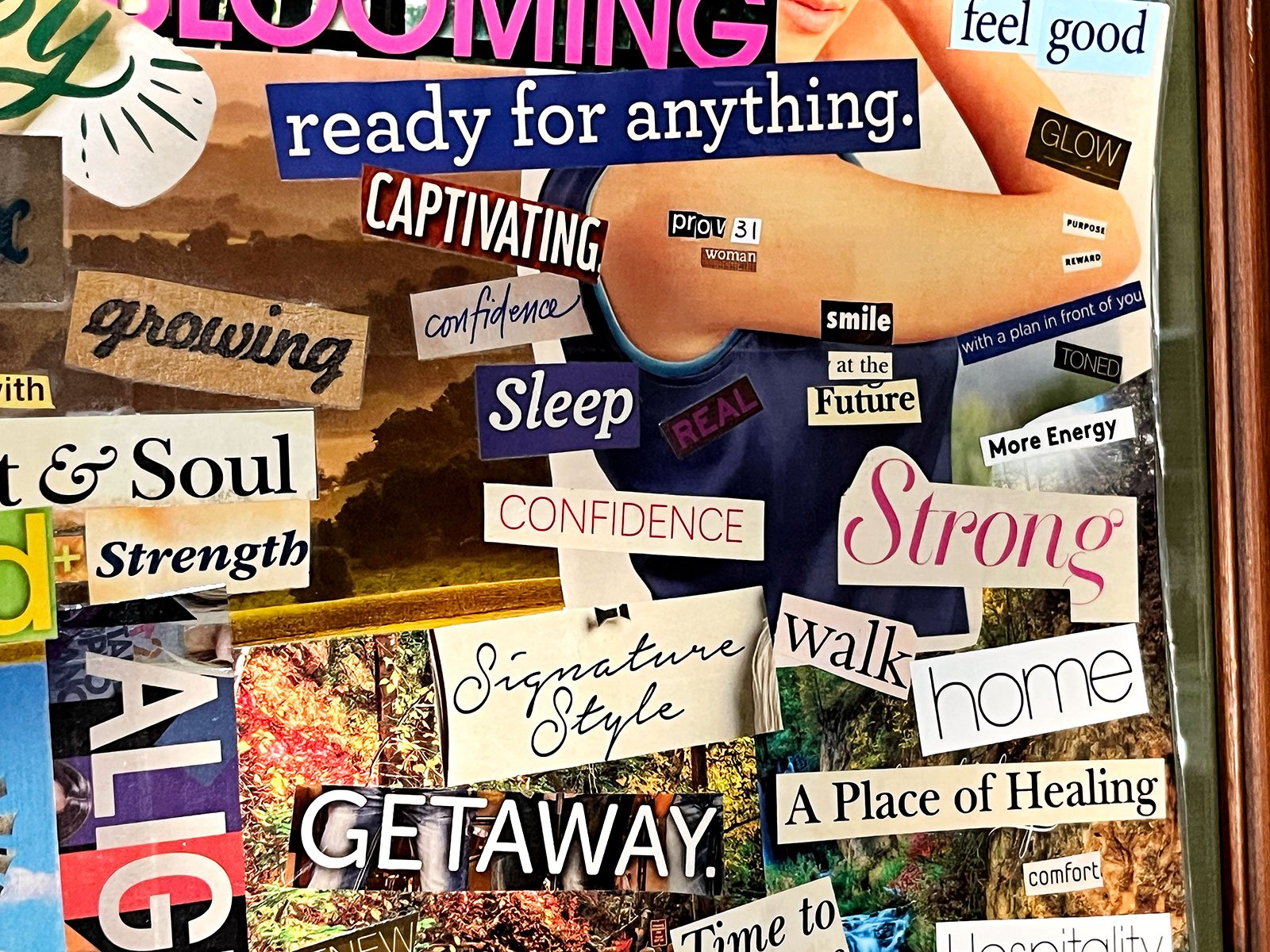
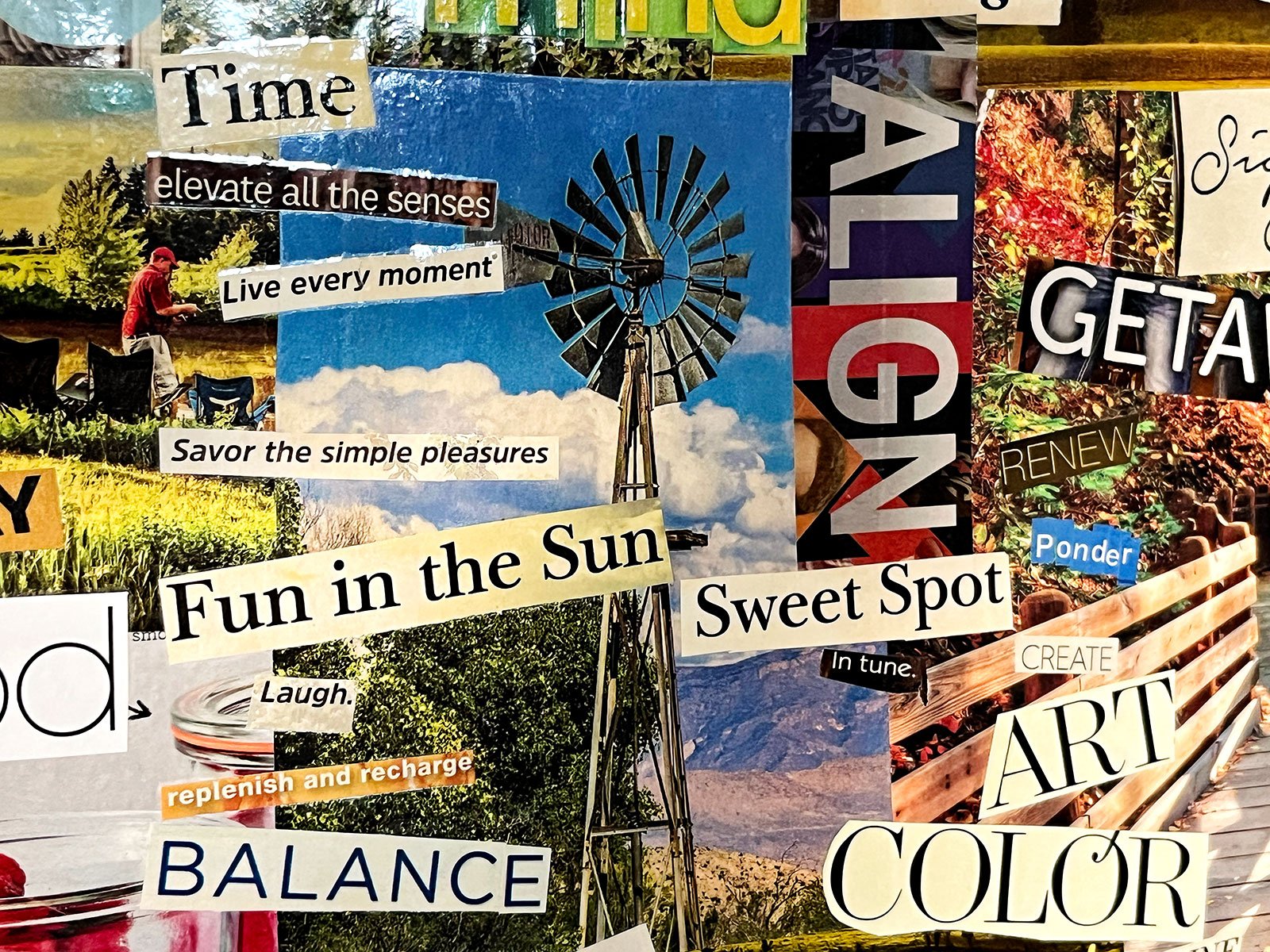
Every vision board is different- because every person is different. And if you make another one next year, it will be different again! Just look at mine.
The kids may make theirs colorful and fully covered, or simple with one main focus. But what is most important is that it is meaningful to the person making it. It will cause them to feel capable and have hope and excitement for the future.
Check out the vision boards that I've made over the years. Each is different and made with different dreams and goals. As I look at them I see goals that I've accomplished since the board was made! That's cool!
If you try this activity with your kids, I’d love to hear how it goes. Put a picture up in the comments!
Craft Tips
These tips can help making a vision board even easier!
- Magazine collection- Individuals and libraries are often looking for ways to recycle their magazines. Ask around and collect up a stack for this project and others!
- Lamination- When a vision board is completed, take it to a local business that has the ability to laminate a larger poster. This makes the magazine color really “pop” and causes the project to last longer.
- Take a picture- Take a picture of the vision board or part of it and use it as the background on your devices.
Craft Variations
Here are a few variations you’re welcome to try with this vision board craft:
- Digital vision boards- As mentioned above, digital vision boards are a good option for some people. They work as backgrounds on your digital devices and can then be seen daily!
- Colored poster board- Colored poster board (even black) can give the project a unifying and brighter look if the entire board is not covered with pictures.
- Family vision board time- Do this activity as a family and each make a vision board. Sometimes kids and adults can point out ideas for the other person- “you’re good at __, or you love to __”. You might not think of these things yourself!
FAQ About Dream Boards
Spend some time dreaming and setting goals for your future in the different areas of your life. Gather magazines and a poster board. Cut out pictures and words that represent these dreams and goals and energize you emotionally. Arrange and glue down these pictures and words to the poster board. Hang the board up in a prominent place that you’ll see daily. Take small actions that move you forward towards these meaningful dreams for your future.
It should be inspiring to you personally with pictures and words that represent your goals and dreams. The various areas of your life should be represented- like career & finance, relationships, and health and wellness. The vision board will contain magazine pictures and words you cut out, photos, drawings, etc. It is to inspire you to take action on your goals and dreams and move them forward.
Common mistakes when making a vision board include- making it too general, not being emotionally connected to it, just choosing pretty pictures instead of meaningful ones, seeking perfection or to please others instead of making it personal, making it a wish list of material items, overfilling the board, no pre-planning to dream and invest ideas.
Take the time to dream and write down your brainstormed ideas for those dreams and goals. Let the emotions come forward so they are meaningful to you personally. Don’t just try to make a list of things you want (material items). Use the Free Vision Board Planning Worksheet to help in this process.
More Paper Crafts for Kids
Looking for more great DIY paper crafts for kids? Here are a few favorites for you to try:


Come Join the Fun at WTN!
Try this craft, leave a comment, rate it, and tag a photo with #WelcometoNanas wherever you post.
So, I’d love to hear from you. What’s the number one goal you’re putting on your vision board this year? Drop it in the comments below. Declaring your goal is such a powerful first step, and I can't wait to cheer you on.
More Crafts!
Love getting crafts straight to your inbox? Sign up to receive a weekly email and get a free gift!
The Ultimate Guide to Creating a Vision Board (or Dream Board) That Actually Works
Equipment
- none needed
Items Required
- Poster board whole or half sheet
- Magazines Collect all types of magazines
- Glue sticks
- scissors
- Free Vision Board Planning Worksheet 1 copy per person
Instructions
- PlanUse the Free Vision Board Planning Worksheet to do some dreaming and goal setting before starting the vision board. There is a lot of good info on vision boards and how to make one in the post at: https://welcometonanas.com/vision-board/ Note: Don't skip this step, it is important in making an inspiring vision board that helps you reach dreams and goals.
- Find ImagesLook through magazines to find pictures (and words) that will go along with the ideas you’ve brainstormed and written down on the worksheet. Find pictures that represent your dreams and goals. Cut them out.
- Organize/LayoutBefore gluing anything down on the poster board, let the kids lay everything out and move them around. Remember adults, this is for the kids to do by themselves as much as possible so it is meaningful to them.They will play with it until they have the pictures arranged in a way that pleases them. It’s ok if they overlap.Then glue the pictures down using a glue stick.
- From the Free Vision Board Planning Worksheet used in Step 1 you should have some words that you would like to add to your poster board. Find these words or similar words that are meaningful to you in the magazines.Add glue and paste the words on top of the pictures you already glued down on the vision board.
- Your vision board is finished! Now, it needs to be located where you can see it easily. That is the magic sauce, the way the dreams come to mind each time you look at the board.Seek to look at it at least once every day and feel the emotion that it brings up with the dreams and goals. This keeps the RAS (reticular activating system) actively looking for new opportunities and ideas to bring to mind that will move you forward as you act on them.
Leave a Reply